

What Is Music Therapy? A Complete Guide for Families in Lake Macquarie and the Hunter Valley

Updated: May 1
If you live in Lake Macquarie, Cooranbong, Morisset or anywhere across the Hunter Valley, you may have heard the term music therapy. But what does it actually mean? How is it different from listening to music or taking music lessons? Music therapy is an evidence-based allied health profession delivered by university-trained clinicians called Registered Music Therapists (RMTs). It uses music to support physical, emotional, cognitive, communicative and social goals. It's available right here in the Hunter Valley through Watagan Health Hub.
Music therapy vs music lessons: what's the difference?
This is one of the most common questions families ask when they first encounter music therapy. Music lessons are recreational and educational. They teach skills, technique and repertoire. Music therapy is a clinical intervention. Registered Music Therapists in Australia hold a minimum of a postgraduate qualification (typically a Masters degree) and are registered with the Australian Music Therapy Association (AMTA). Musical ability on the part of the client is never a requirement. Sessions are always goal-directed, beginning with a clinical assessment and resulting in a written therapy plan with measurable outcomes. At Watagan Health Hub, both Tayla Weber (BMus, MCrMusTh Distinction) and Ashleigh Campbell (BMus, MMusThrpy) hold Masters-level qualifications and maintain full AMTA registration.
What happens in a music therapy session?
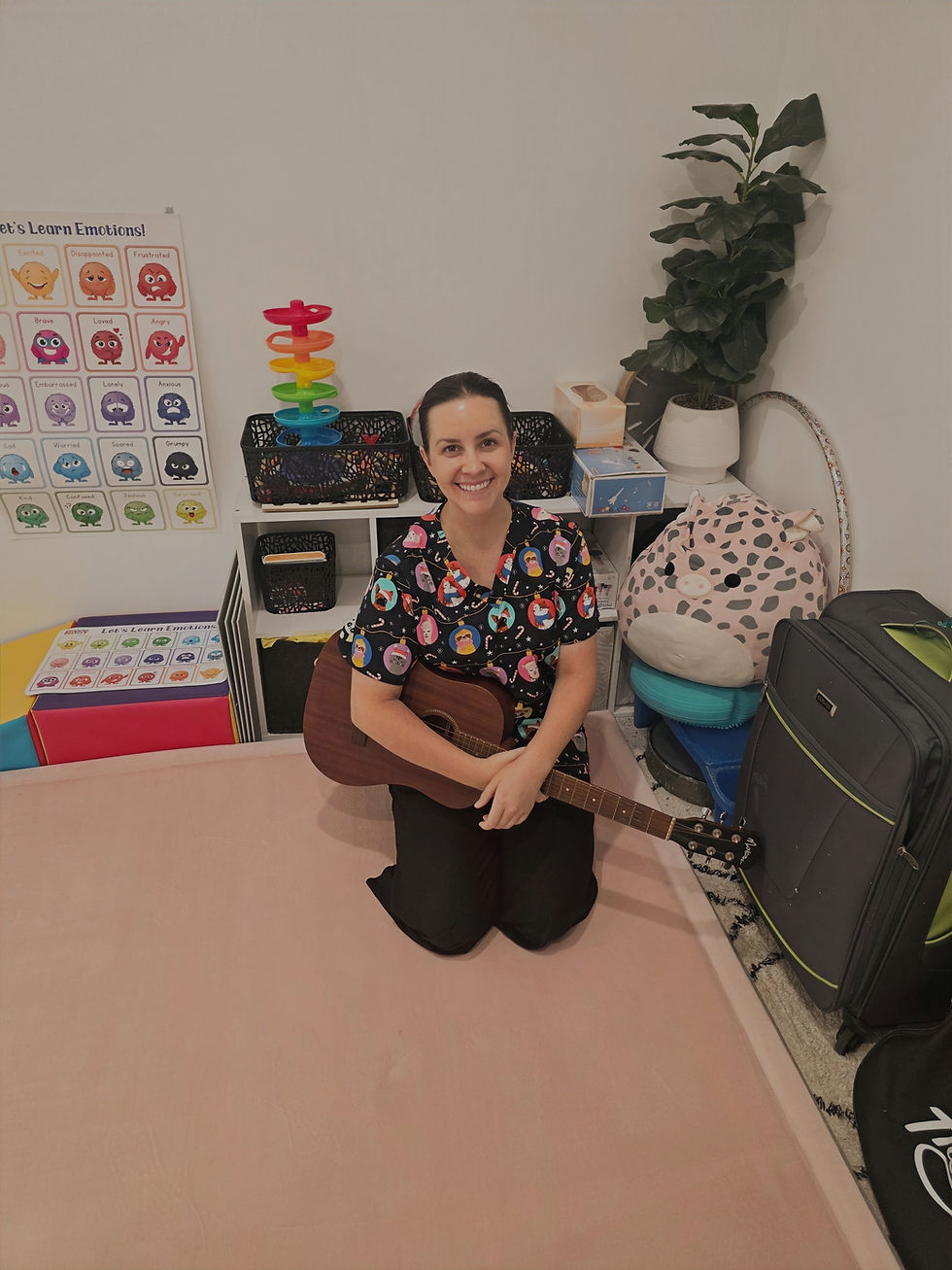
No two music therapy sessions look the same, because each one is built around the individual. Sessions may involve active music-making (playing instruments, vocalising, improvising together) or more receptive approaches such as guided listening, music-assisted relaxation, or lyric analysis. Songwriting is commonly used with adolescents, adults and older people, and music-movement activities are frequently incorporated for clients with physical or neurological needs. Sessions are delivered wherever they are most meaningful for the client: at the Cooranbong clinic, at the client's home, at schools and early learning centres, or at aged care facilities throughout the Hunter Valley and Central Coast.
Who can benefit from music therapy?
Research published in the Cochrane Database of Systematic Reviews has demonstrated the effectiveness of music therapy for autism (Gold et al.) and dementia (van der Steen et al.). Music therapy supports children with ASD, ADHD, developmental delay and cerebral palsy; adults managing mental health, neurological rehabilitation, Parkinson's disease and stroke recovery; and older adults living with dementia, social isolation and palliative care needs. Music memory is preserved even in late-stage dementia, making music therapy one of the few interventions that remains effective throughout the condition's progression.
How is music therapy funded in Australia?
Music therapy is funded under the NDIS under Support Category 15 (Capacity Building, Improved Daily Living). The line items are 15_615_0128_1_3 for participants aged 9 and over, and 15_615_0118_1_3 for those under 9. Watagan Health Hub accepts self-managed, plan-managed and agency-managed NDIS participants. For older adults, funding is available through CHSP, Home Care Packages, DVA and residential aged care arrangements. Private self-funded sessions are also available.
Music therapy at Watagan Health Hub
Watagan Health Hub is at 646 Freemans Drive, Cooranbong, with mobile services extending across Lake Macquarie, Morisset, Newcastle and the Hunter Valley. To learn more, visit our music therapy Lake Macquarie service page, or book a music therapy session online today. Watagan Health Hub is also a growing allied health Cooranbong clinic that will soon include speech pathology, occupational therapy and myofunctional therapy.


Comments